
How Arrest Warrants Work in Burleson County
An arrest warrant lets an officer take a person into custody on the court's terms. That power comes from the court, not the police. Under Code of Criminal Procedure Article 15.03, a Texas magistrate may issue a warrant or a summons on a sworn complaint. Burleson County matters land in District Court, County Court, a JP court, or a city municipal court, depending on the case. The issuing court keeps its docket. The agency that serves the paper may keep records of its own, so one office rarely holds both.
Burleson County Arrest Warrants Begin
Article 15.03 of the Texas Code of Criminal Procedure sets out a magistrate's power to issue process on a sworn complaint, and the link leads to the statute itself. From there a file grows. The application, the probable-cause review, the signed order, and any later return all become part of the court record. Public access can depend on whether the warrant has been executed and on other laws that limit disclosure. A booking label or press release is not the court file. If the charge or case is unclear in Burleson County, ask the clerk which court holds the docket and what documents you may inspect.
Arrest Warrants: What They Contain
No single countywide warrant form or number format is published for Burleson County. What a warrant looks like varies by court. The table lists fields worth asking about when you speak with the issuing clerk; no office is promised to display every item the same way. Keep the citation or cause number from your paperwork so the clerk can route you.
| Case identifier | Ask which cause number connects the warrant to the court docket. |
|---|---|
| Process type | Confirm that the record is an arrest warrant, not a summons or bench warrant. |
| Issuing court | Identifies the judge or magistrate and the clerk's record route. |
| Alleged offense | Read it with the official charging document and current court status. |
| Bond information | No countywide amount schedule was located; confirm any amount with the court or jail. |
| Execution or return | Ask whether service has been entered and what public record is available. |
Burleson County District Court Warrants
The Burleson District Clerk handles felony files. Those cases arrive by indictment, and the office runs an in-person criminal-record search within its stated scope, so bring a felony question there in person. The county's district courts are the 21st and 335th. Skip the city citation portal and the County Clerk's property-record search for district felony matters. Clerk and administration have separate roles. The District Clerk holds the case record, while district-court administration handles scheduling and process questions, so route each ask to the right desk. One caution applies. A clerk's search covers the district case, not every Burleson County warrant across JP, municipal, sheriff, and federal systems. The district courts page lists the county's district court contacts.
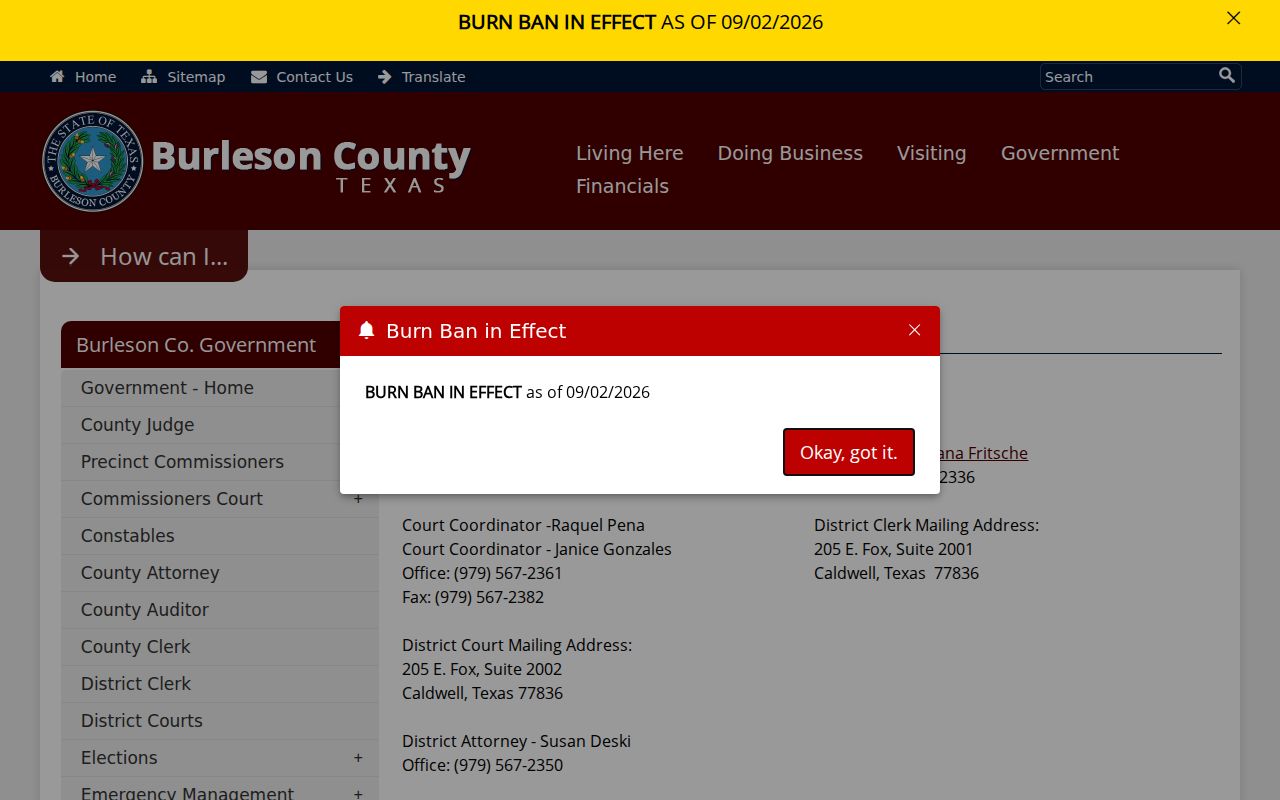
Use the court named in the case file as the first record route.
How Warrants Get Served in Burleson County
The court issues the paper; a peace officer executes it, and who serves it depends on the case. The officer may be a sheriff's deputy, city police officer, constable, Texas Ranger, Texas Department of Public Safety (DPS) trooper, or another authorized officer. Agencies keep records of their own. A return or agency report stays with the server. The issuing court keeps the docket. Recall or hearing entries land there too. Burleson County's sheriff and jail share the Highway 21 East address. No office there runs a public warrant window, and none promises that a warrant can be settled at the jail counter. Call the issuing court before you travel.
Burleson County Arrest Service Records
A court file has dates. It shows when process issued or when a judge recalled it. An agency file is different, and may hold a service return, booking record, or investigation file. One office rarely holds both. A records request aimed at the wrong desk comes back empty, so ask the clerk or records staff who keeps the document you need and whether your request should go elsewhere. The Burleson County Sheriff's Office (BCSO) jail page links current contact and bonding-company information. It publishes no universal bond amount or release schedule. Verify the court, the case, the payment method, and current instructions directly. Check before you pay. The same official jail page shows the facility contact and the approved-bonding-company route.
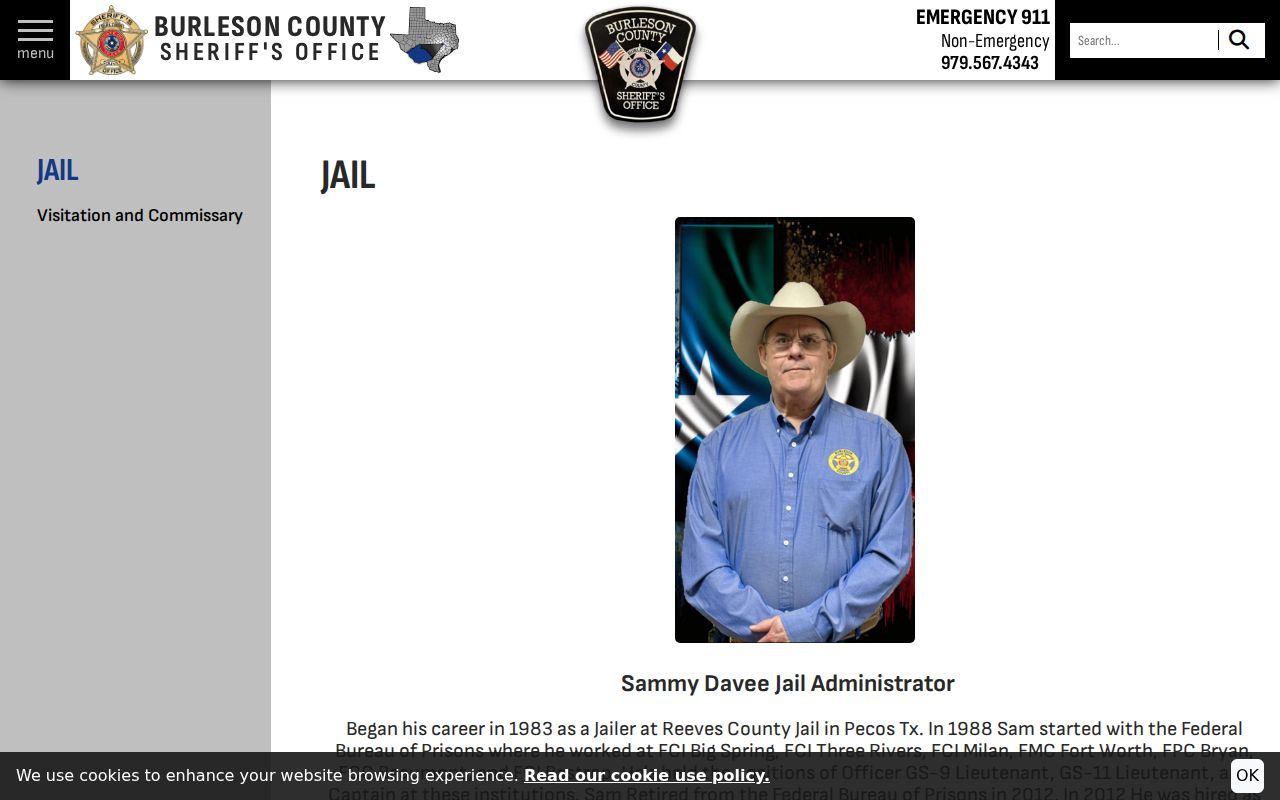
This custody contact page does not identify a universal warrant-resolution counter.
Arrest Warrants, Summonses, and Bench Warrants
An arrest warrant authorizes custody. It rests on a sworn complaint and probable cause. A summons works differently. It directs a person to respond or appear, without an arrest order attached. A bench warrant usually follows a missed appearance or another court obligation. Booking or court systems may abbreviate these names, so ask the issuing office to name the exact process. See the bench warrant explanation for missed-court routing.
| Feature | Arrest Warrant | Summons | Bench Warrant |
|---|---|---|---|
| What it orders | Arrest under the warrant's terms | Respond or appear in court | Bring a person before the court |
| Basis | Sworn complaint and probable cause | Notice to answer a charge | Missed appearance or court order |
| Who issues it | Judge or magistrate | Court or authorized officer | Judge of the court handling the case |
| First question | Which court holds the case? | What response date applies? | What court action is now required? |
Handling an Arrest Warrant in Your Name
Start with the court on the paper. Ask the clerk what the record really is. It may be an arrest warrant, bench warrant, capias, summons, or another process, and the clerk can also say what public information is available. If arrest, bond, or a pending case may be involved, talk to a lawyer before making statements or showing up in person. Burleson County publishes no universal walk-in surrender procedure. A lawyer can weigh whether to contact the court, seek a recall or quash order, arrange an appearance, or address bond.
Important: If the case may lead to arrest, get legal advice about the safest way to contact the court before visiting an office.
Burleson County Executed Warrant Access
Texas law leans toward openness once a warrant has been served. Code of Criminal Procedure Article 15.26, backed by an Attorney General open-records letter, lets the public see an executed arrest warrant and its supporting affidavit. An active warrant is a different matter. No statute demands an online list of unexecuted warrants in Burleson County or anywhere else. The Texas Public Information Act still leaves room for law-enforcement exceptions on investigative records. Juvenile papers get extra protection under Family Code Section 58.010. Search-warrant affidavits, sealed files, and pending matters follow their own rules, so ask whichever office holds the record to release whatever the law permits.
Burleson County Federal Arrest Warrants
Burleson County sits in the Western District of Texas, Austin Division, not the Eastern District. The federal court's venue page states which division properly handles a matter there. A search of public PACER or CM/ECF dockets can turn up filed materials. Sealed or unserved process is another story. Those items often stay out of view. The Austin federal courthouse and the U.S. Marshals contacts are also outside Burleson County. For any possible federal warrant question, a lawyer or the federal court's own route is the sound path, since a county citation portal, a sheriff roster, and a federal docket each answer different questions.
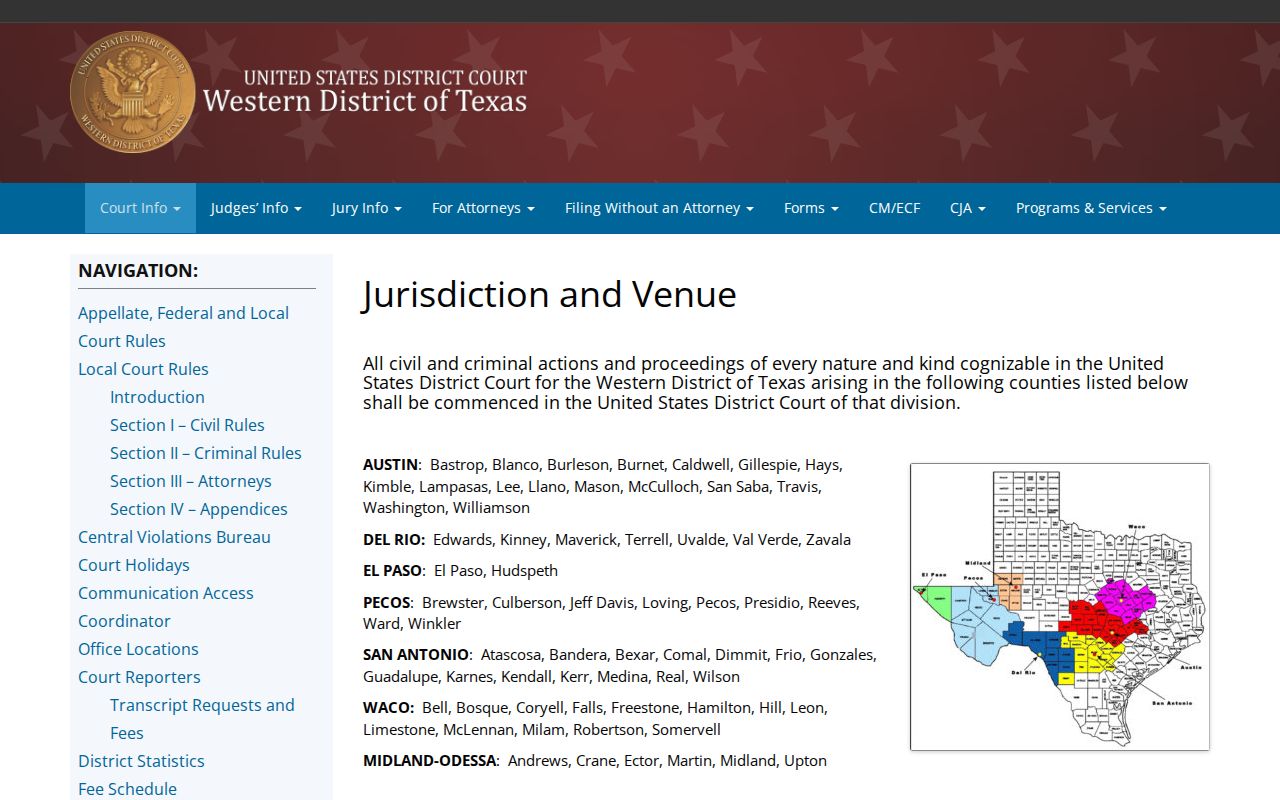
The U.S. Marshals district contact page lists courthouse contacts for that federal route, which runs outside Burleson County's local systems.
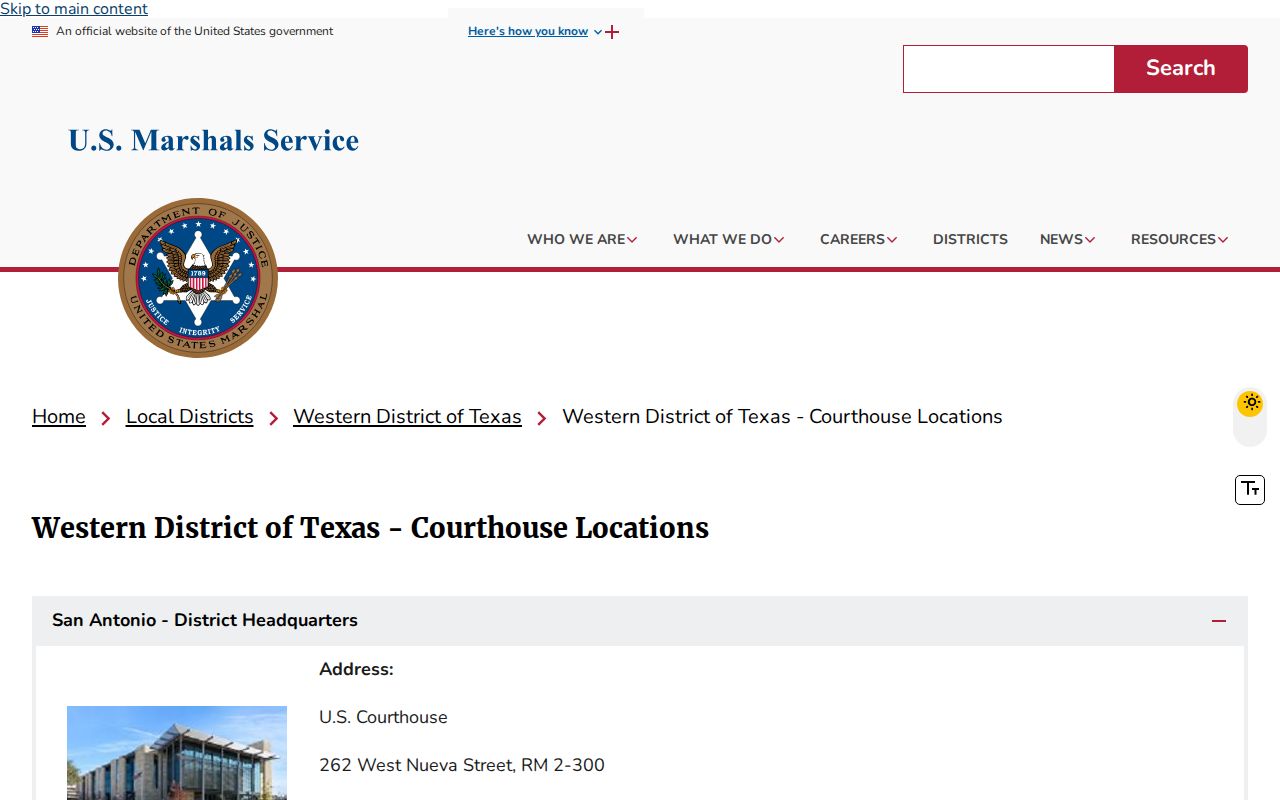
Keep federal contacts separate from local JP, municipal, county, and district records.